

From 2015 to 2020, the Institut des Sciences du Mouvement (ISM*) and Airbus Helicopters worked on the development of bio-inspired mechanical systems to reduce wear and tear on helicopter components, as part of the "Bio-inspired Mechanical Design" Industrial Chair.
A scientific issue at the heart of the Chair: wear on mechanical components
Until now, Airbus has used technologies and methodologies derived from the development of mechanics in the early 19th century to develop its helicopters. Today, however, the mechanical demands placed on parts by increased aircraft performance mean that these "practices" are reaching their limits in terms of wear and tear on mechanical components. Indeed, even if components wear less thanks to complex thermochemical surface treatments such as carburizing, carbonitriding or nitriding, these coatings are still very costly and difficult to apply. A new alternative would be to try to reduce the contact pressure between the moving parts.
Drawing inspiration from Mother Nature: bio-inspired mechanical design
The search for a solution may involve what has come to be known as "bio-inspiration": how has nature managed to optimize certain structures over millions of years, to enable certain animal species to migrate for very long distances, or to support a large weight in motion? This is the question at the heart of the Airbus Helicopters - ISM Chair, with researchers from the "Conception Bio-Inspirée" (CBI) team on one side, and industry on the other, faced with situations of premature wear. The aim of this collaboration was to study and then draw inspiration from nature to develop innovative artificial systems, in order to "achieve a breakthrough in the design of the geometry of elementary mechanical links, drawing inspiration from living or fossilized geometries shaped by nature over millions of years".
Resources and scientific approach
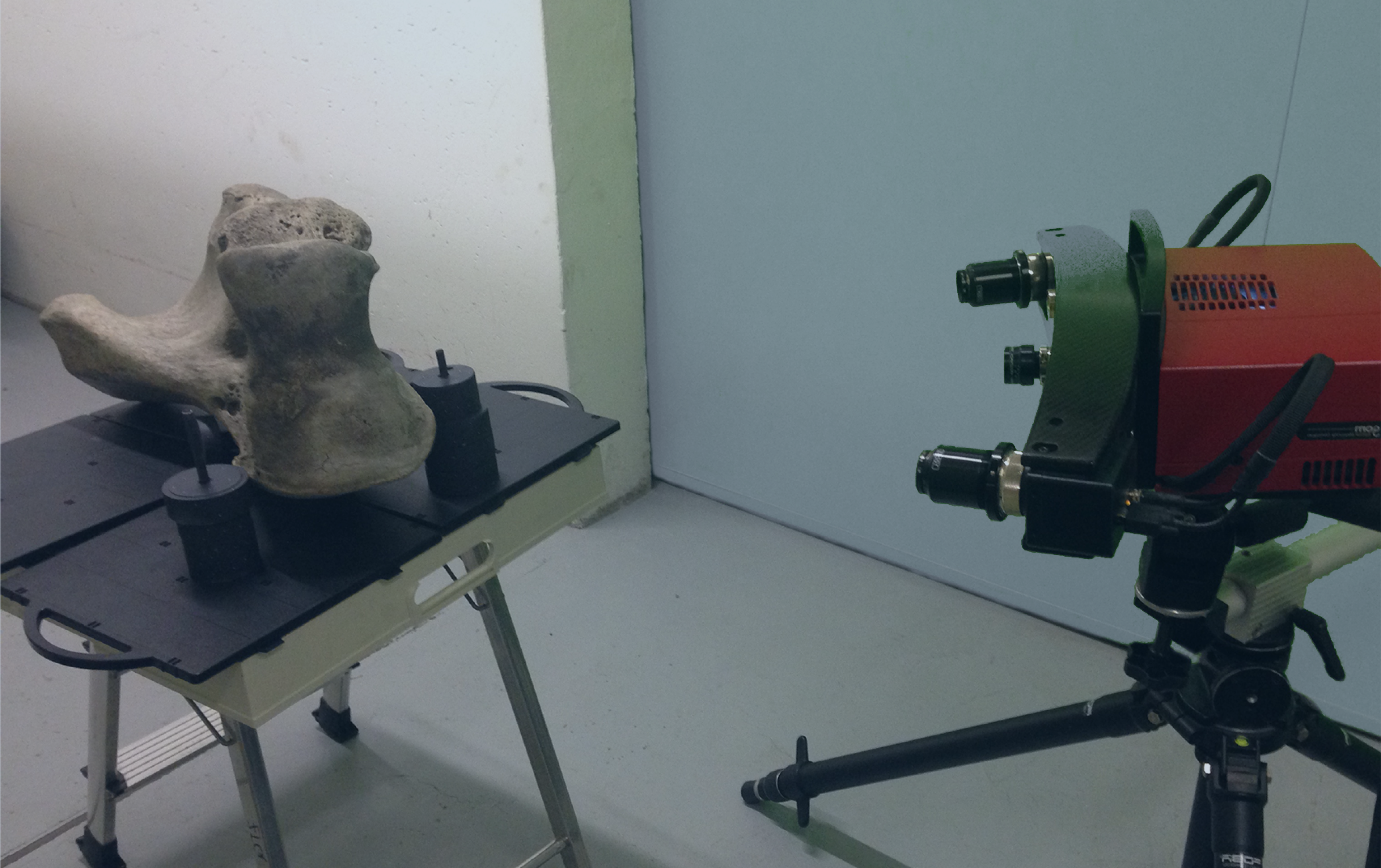
With access to the reserves of the Paris Museum of Natural History, the scientists were able to benefit from the resources and natural structures present in different animal species. By scanning elephant, wildebeest and antelope bones, they were able to demonstrate that certain animals have specific contact surfaces, enabling them to better manage pressure and thus limit wear.
Results
The work carried out, via 2 CIFRE theses, has already involved calculating the forces and then the contact pressure involved in the reference biological bonds.
In addition to understanding these new connections and geometries of interest, the researchers also noted that the structure of bones, both hollow and honeycombed, seemed to respond to a revealed law of nature.
At the end of these 5 years of collaboration, the results are very positive. The partnership has been fruitful for both the research laboratory and Airbus Helicopters, since the work has led to the publication of 7 articles in international journals, the recruitment of two PhDs by the manufacturer, and the transfer of new pivot link geometries to future Airbus Helicopters designs.
Last but not least, this work has revealed new mechanical link geometries and structures, which could benefit other application fields requiring repeated, force-transmitting movements, such as sports prostheses or future sports equipment.
*A Carnot STAR unit, ISM (Aix-Marseille University/CNRS) defines itself by its "innovative interdisciplinary approach to Movement Sciences", an interdisciplinarity that enables it to address a wide range of markets, from sports and transport to healthcare and the Silver economy (ageing well).