

An innovative solution for automating the inspection of parts during production is the fruit of a fruitful collaboration between the Laboratoire d'Informatique et Systèmes (LIS)*, the Ecole Nationale Supérieure d'Arts et Métiers (ENSAM) in Aix-en-Provence and I-MC (Innovative Manufacturing & Controls).
Today, the company designs automated control solutions to support manufacturers in the rapid modernization of their production tools.
The creation of a start-up around "industry 4.0"
The story began in 2017, when, as part of an internship at CEA Cadarache, the LIS G-Mod (Geometric Modeling) team and the LISPEN laboratory at ENSAM in Aix-en-Provence were contacted with a problem related to a need for robotized optical control. A few months later, the start-up I-MC was created to develop a solution for automating the inspection of parts during production, and a CIFRE thesis project was set up to develop innovative digital tools.
The scientific contribution of LIS and LISPEN
The in-situ inspection of mechanical parts during machining required the development of an algorithm for planning the scanning and alignment of 3D point clouds.
This multi-disciplinary project led to the development of several innovative solutions, the subject of a patent application and the publication of an article in "Computer-Aided Design" (1):
- the development of an efficient approach to automatic part scanning planning.
- The general method developed can be adapted to any optical scanning tool (Lidar, camera, profilometer, fringe projection sensor, etc.) and to any industrial environment in which the part to be inspected is positioned;
- the development of a strategy for aligning point clouds with each other (in the case of data from optical sensors), with evaluation of the alignment complexity.
A success story
All the algorithms developed as part of the CIFRE thesis have been integrated into the solutions marketed by I-MC, a company based in Pertuis (Vaucluse)
.
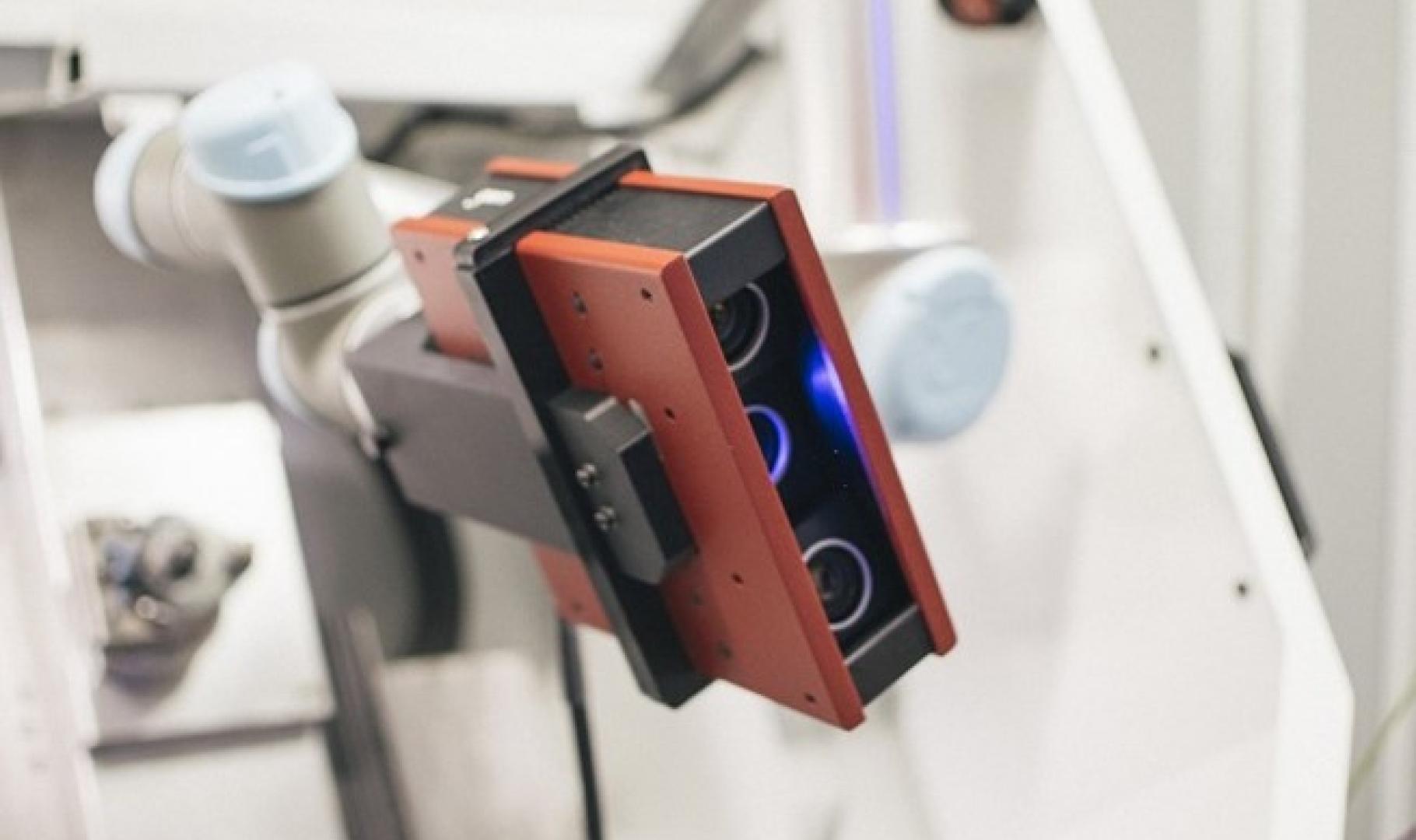
The result is "CAM-RON", a solution that enables rapid, precise control of a part using a robotized optical sensor, in situ, to correct any manufacturing drift while guaranteeing traceability of all operations carried out. A first version was installed in 2020 on a machine for CEA's defense activities.
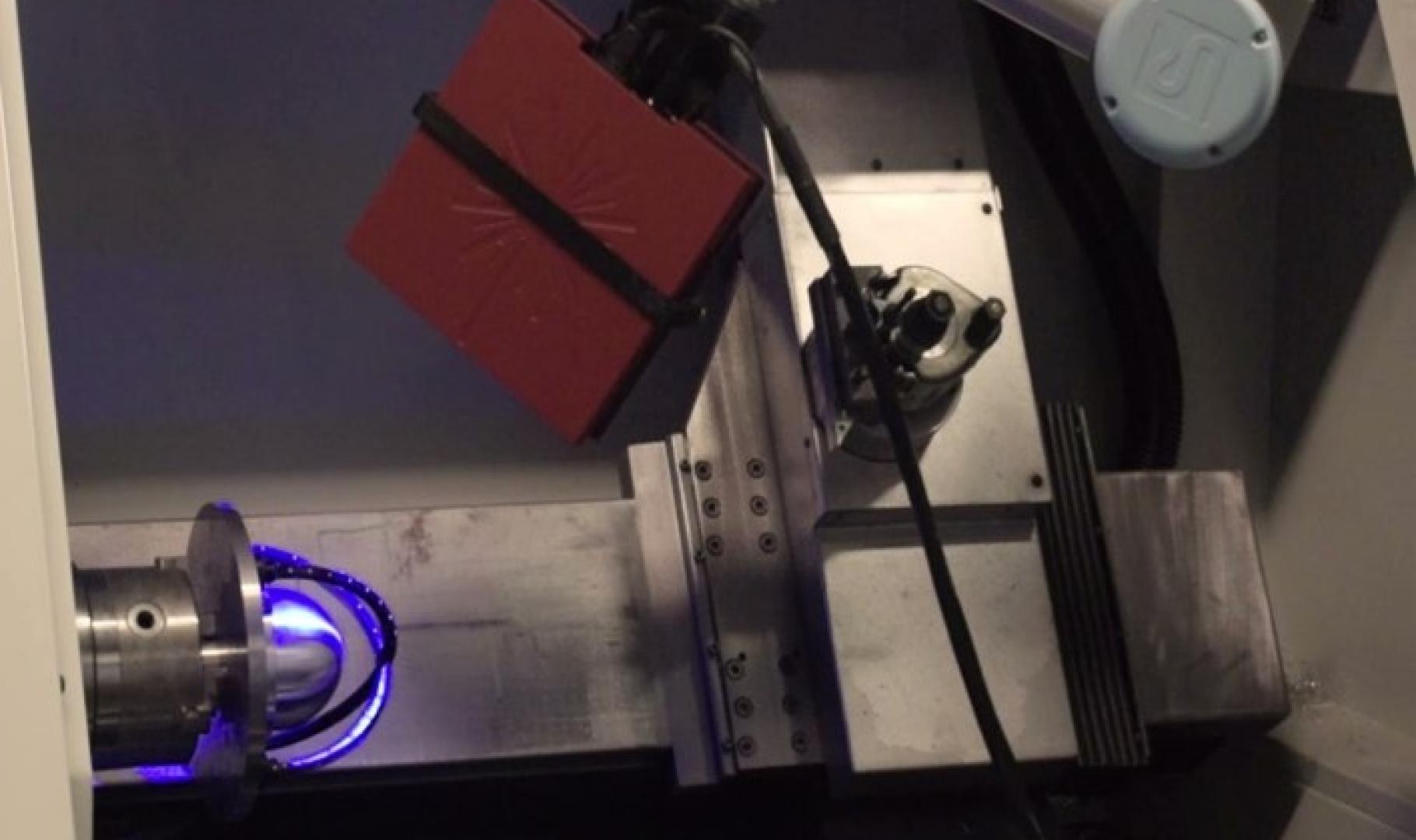
When it was founded in 2017, I-MC had 2 employees, and today it has around ten, with sales approaching 400 k€ by 2021. "CAM-RON" is indeed aimed at players in the aeronautics, space and defense industries, sectors with high stakes in terms of precision and in-situ control.
At the scientific level, the algorithms and numerical tools developed at LIS can be extended to other applications requiring the alignment of volumes in a complex scene, potentially useful for many problems related to the activities of the Carnot STAR Institute (biomechanics, sports, morphological modeling, etc.).
(1) Manon Peuzin-Jubert, Arnaud Polette, Dominique Nozais, Jean-Luc Mari, Jean-Philippe Pernot. Survey on the View
Planning Problem for Reverse Engineering and Automated Control Applications. Computer-Aided Design. Volume141
. December 2021. ISSN 0010-4485, https://doi.org/10.1016/j.cad.2021.103094. https://www.sciencedirect.com/science/article/abs/pii/S0010448521001056…
*A
Carnot STAR
unit
, LIS (Aix-Marseille Université/CNRS/Université de Toulon/Ecole Centrale Marseille) conducts fundamental and applied research in the fields of Computer Science, Automatic Control, Signal and Image. The research carried out at LIS is generally applied in fields as diverse as transport, health, energy, environment, defense, etc.