

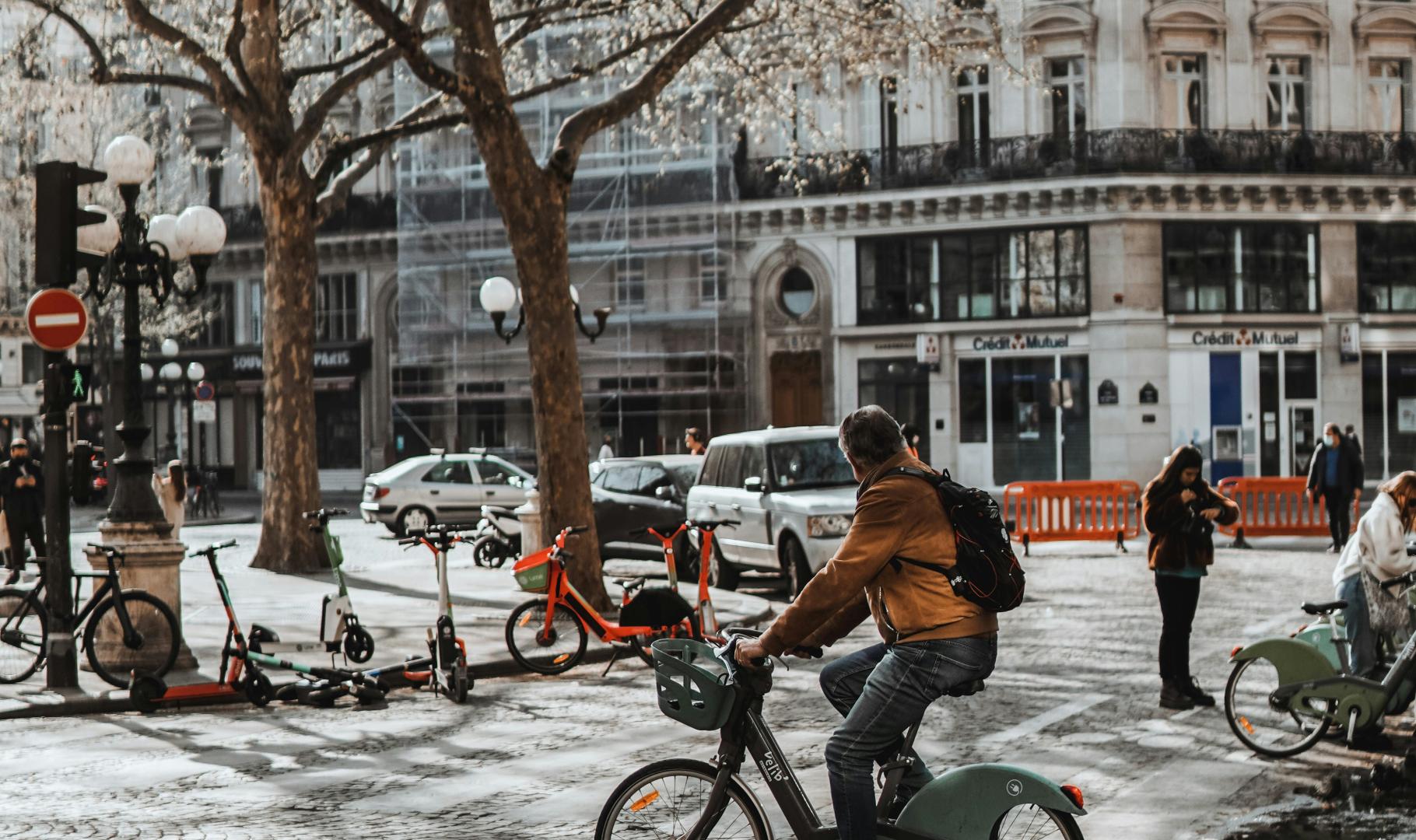
Soft mobility is gaining ground. From self-service bicycles to scooters available via apps, these means of transport are attracting a growing number of users. But this popularity raises a crucial question: how can we better protect these users from the risk of accidents?
In this context, Marianne Guesneau, a doctoral student at the Laboratoire de Biomécanique Appliquée (LBA), is working on a CIFRE thesis in collaboration with Haute-Savoie company In&motion. Two other PhD students are also working on CIFRE theses, focusing on motorcycle airbags. These three projects are part of the research chair established between In&motion and the Gustave Eiffel University.
In&motion is a leader in the field of intelligent on-board airbags, offering protective products for motorcycling, riding and skiing.
However, this new project targets an entirely new market, and the challenge is a sizeable one: to offer an airbag adapted to cyclists and scooter users.
Why an airbag for soft mobility?
Helmets, while indispensable, only protect the head. However, serious injuries also affect the thorax, a particularly vulnerable area. The airbag stands out for its ability to offer more extensive protection and absorb more impact, since the volume available to absorb impact is greater than that of helmets. However, this device faces a number of technical challenges. In particular, it has to be able to detect when an accident occurs, inflate the airbag and reach sufficient pressure to protect the user, all in the space of a few milliseconds.
A promising prototype
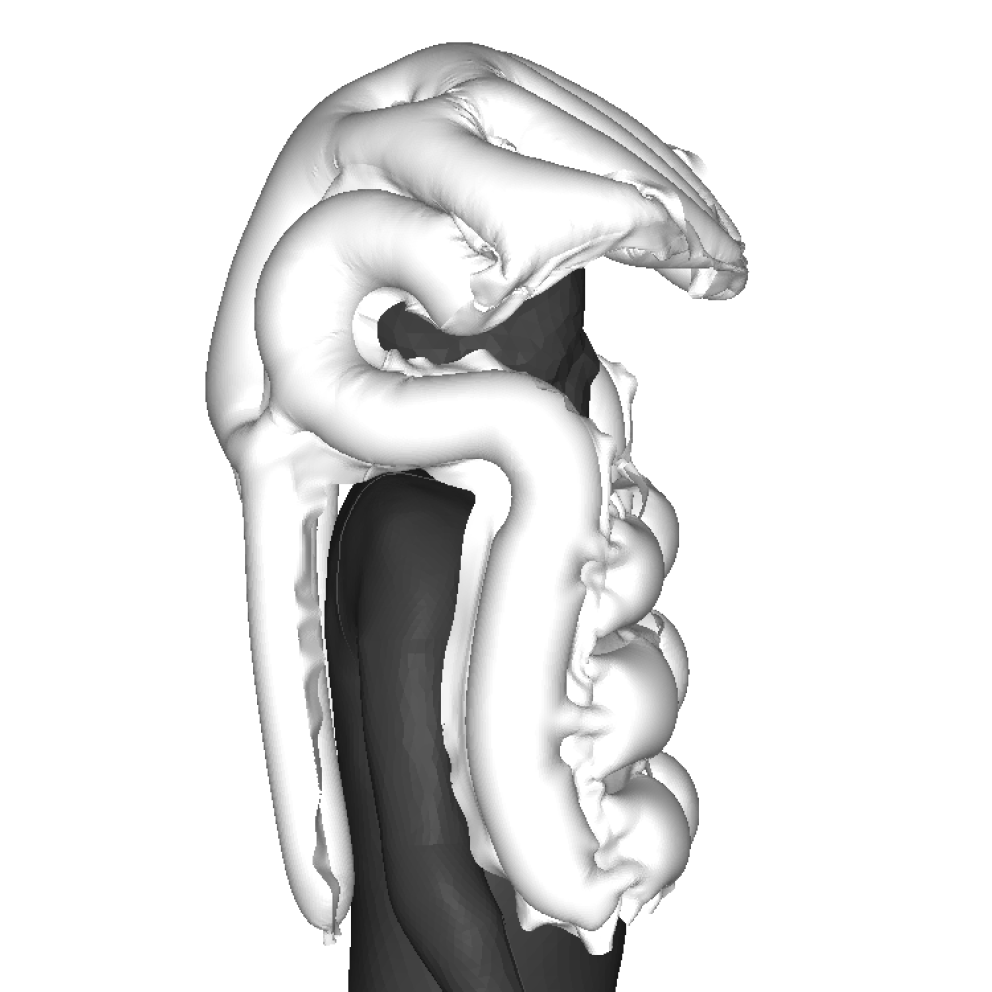
The prototype developed by In&motion takes the form of a backpack. Equipped with sensors and predictive algorithms, it is capable of detecting fall situations in real time and deploys an airbag in just 0.1 seconds, protecting vital areas including the head and trunk.
But this prototype needs scientific validation, and that's where the LBA comes in. This collaborative effort between the company and the laboratory enables the prototype to be perfected, while at the same time providing a scientific approach to confirming the degree of protection it offers before it goes to market.
This scientific work is based on several phases.
Phase 1: Understanding accidents for better protection
To design an effective airbag, we must first analyze the most frequent accidents, under 3 main headings:
- Define the zones to be protected: the head and thorax are the most exposed to serious injury.
- Identify accident scenarios: Falls alone or collisions with vehicles, taking into account several parameters such as vehicle speed or the type of vehicle involved.
- Understanding impact dynamics: How much time elapses between the fall and the impact? What surfaces are successively impacted?
These data, gathered through analysis of police databases, numerical simulations and tests on dummies, have enabled us to define clear priorities for airbag design.
Phase 2: Investigate body impact conditions
In order to best adapt the airbag design, we need to know the precise impact conditions for the different parts of the body: what are the speeds and angles of impact of the head on the ground? Or from the thorax to the hood?
These data will enable us to assess the effectiveness of our protection systems under realistic conditions.
Phase 3: Protection evaluation
The data collected is now used to digitally model the behavior of the airbag and the cyclist or scooterist. This model can be used to simulate a variety of realistic accident conditions. Different airbag pressures can also be tested. The aim? To test and improve the prototype while reducing the need for physical testing.
The future of soft mobility under high protection
The most common accident scenarios are falls alone, often linked to pavement problems. Collisions with vehicles, although rarer, remain extremely dangerous, with more severe impact conditions (high speeds and impact energy). However, for a given impact condition, e.g. a 21km/h impact to the back of the head, the airbag would reduce head deceleration by a factor of 6 compared with a helmet. Less violent deceleration of the brain means a much lower risk of concussion.
Currently in the development phase, prototypes have been entrusted to test cyclists, mainly based in Paris and Annecy. The airbag will also have to obtain certification once the prototype has developed into a final version ready for market. The team is working with certification bodies to establish a specific protocol for evaluating this unique product, for which no standards currently exist.
While the bicycle market is a priority for In&motion, the market for electric scooters is booming. The question remains: should cyclists and scooterists be protected in the same way?
This collaboration between the LBA and In&motion is a fine example of innovation in the service of safety. While our modes of transport may be changing, our safety must remain an absolute priority.