

Wednesday, February 07, 2024
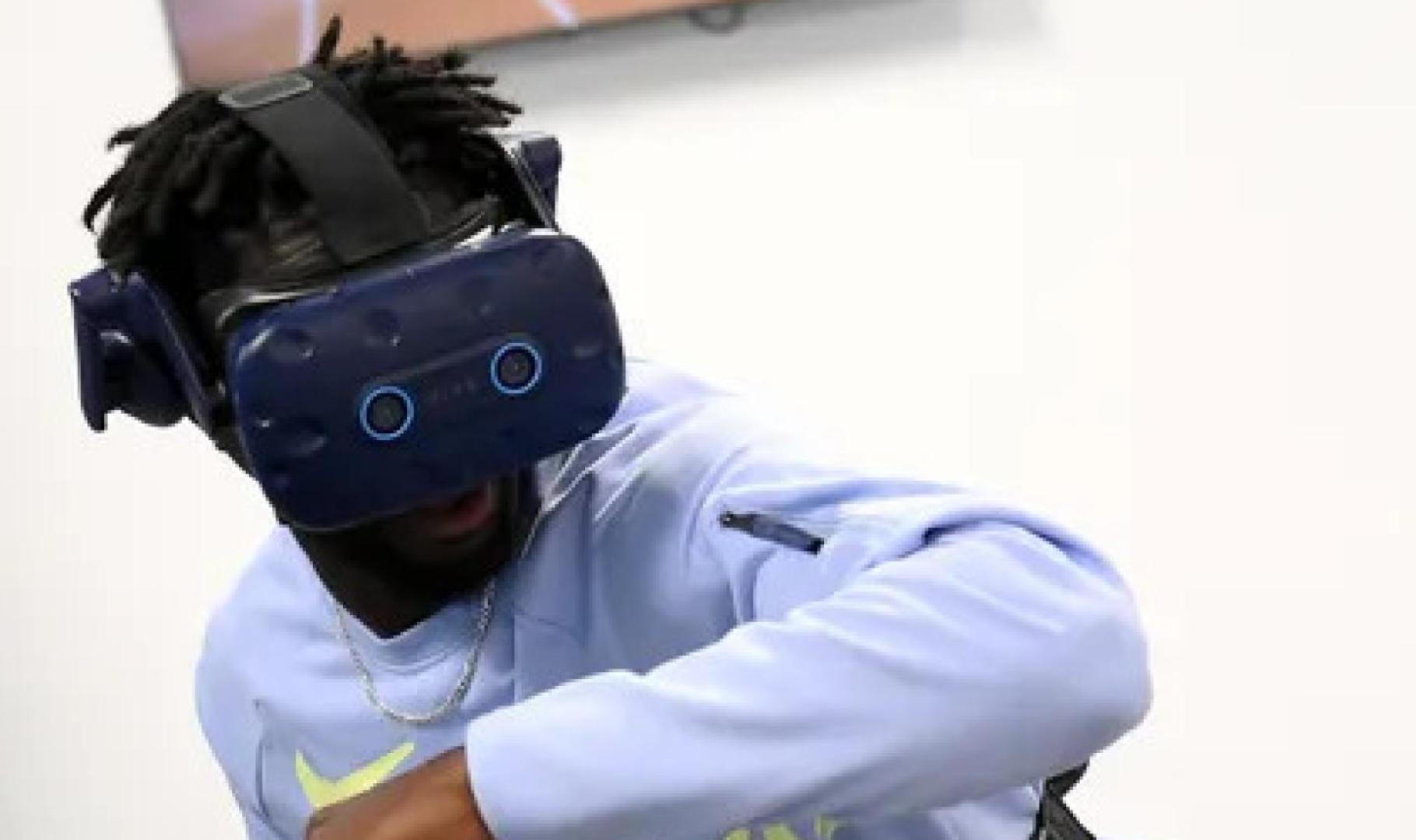
In their quest for Olympic gold, athletes on France's 4x100m relay teams are incorporating virtual reality (VR) into their training
.
The REVEA project
This surprising novelty is supported by the REVEA project. Coordinated by theUniversity of Rennes-2, this project also brings together the Universities ofAix-Marseille (ISM), Paris Saclay (CIAMS), Reims Champagne-Ardenne (PSMS) and INSEP.
The aim of this highly promising project is to optimize the perceptual-motor and cognitive performance of top-level athletes in various disciplines. Relay athletes, boxers and gymnasts train using virtual reality headsets, which enable them to work on specific areas for each sport.
Virtual reality, a complement to mental and physical preparation
Each discipline in the REVEA project has its own specificity. The part we are interested in here concerns the 4x100 relay, carried out by ISM, a member of Carnot STAR.
Athletes are immersed in an environment in which they can train with digital twins of their partners and opponents, duplicating the athletes' running style. These digital twins are created using motion capture technology. VR headsets are able to reproduce realistic racing conditions, offering athletes faithful immersion in a digital replica of the sporting environment, even including distractors or stadium noises worthy of a final.
This solution has been designed in coordination with coaches and athletes alike, to respond precisely and efficiently to their needs.
This training process, which focuses solely on starts and decision-making, seeks to ensure an optimum exchange of speed between athletes as the baton is passed. The relay runner's ability to take off at the right moment is crucial, which is why working precisely on the initiation of the run is so important.
Virtual reality offers athletes the advantage of performing a greater number of repetitions, while considerably reducing the risk of injury, with around thirty passes in 20 minutes in VR compared with 3 to 4 passes for physical sessions.
To optimize athlete preparation, a performance report (feedback produced in real time) is provided to athletes and coaches, offering a global view of individual strengths and weaknesses, facilitating the implementation of targeted strategies for performance enhancement.
Integrating VR into training programs
The next major challenge facing research teams is to successfully assess the physical and cognitive loads imposed by virtual reality sessions. In particular, this assessment will enable VR to be effectively integrated into training programs, for a better balance between sessions carried out in VR and those scheduled in the field.
What's next for the project?
Ultimately, the aim is to offer a flexible performance optimization tool that can be used autonomously by coaches and athletes.
The project could also be extended to future top-level sportsmen and women, as well as to less expert populations. This would enable the latter to improve their skills through the use of new pedagogical tools.
REVEA project, serving athletics, but not only...
This project is also being developed to improve the performance of boxers and gymnasts.
A highly promising French innovation, and a major asset in the quest for sporting and Olympic excellence!