

Monday, March 11, 2024
As the world prepares for the Olympic Games, a crucial aspect of sports performance is attracting attention: muscle recovery (structural and functional) after endurance events such as running.
Certain Olympic disciplines, such as running, are growing in popularity, raising crucial questions about the risk of injury for the less well-trained.
Indeed, while running is known for its health benefits, it also involves thousands of impacts on the ground and eccentric muscular actions, likely to cause muscle micro-lesions. Muscle recovery, which lasts several days, is notorious for the delayed muscle soreness associated with it.
But what are the mechanisms of muscle recovery?
That's what Caroline Nicol, a teacher-researcher at the Institut des Sciences du Mouvement (ISM), and David Ben Dahan, research director at the Centre de Résonnance Magnétique Biologique et Médicale (CRMBM), set out to discover through the GenderRun and Gender-Recov projects.
Towards a better understanding of muscle recovery
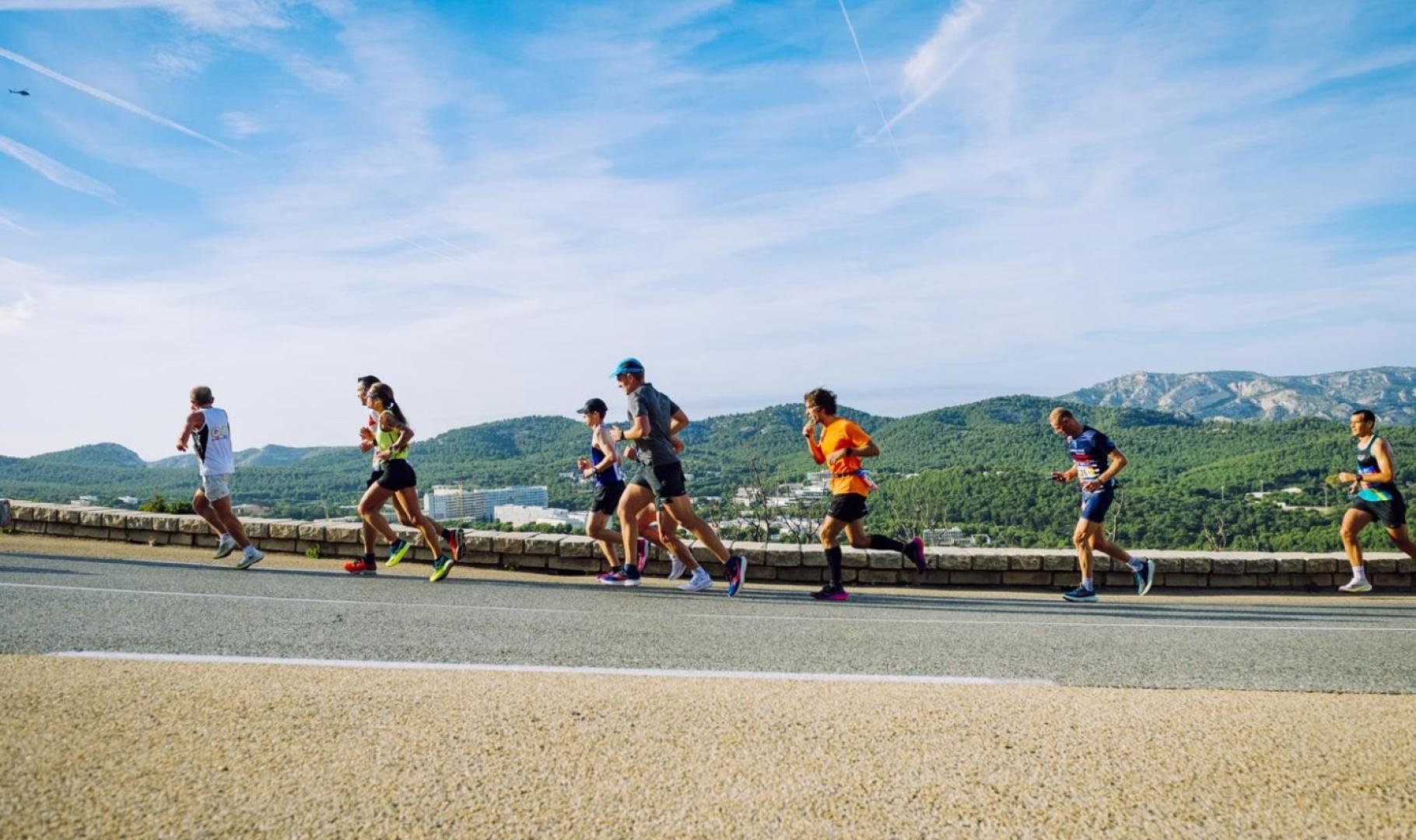
As part of these projects, our scientists studied a population of men and women taking part in the famous Marseille/Cassis running race, via a series of tests, before/during/after exercise (up to day 4 after the race).
If you'd like to find out more about this research, we've written a detailed article on the subject!
These two studies demonstrated in particular that:
- Women had better recovery at functional level, in tests involving the quadriceps and sural triceps;
- At both structural and functional level, women had similar recovery to men in tests involving the hamstrings;
- Inflammation (as a result of micro-lesions) persists several days after the subjective sensation of soreness has disappeared, increasing the risk of injury as runners believe they have recovered
.
Muscle strengthening for effective injury prevention
Based on these results, two new avenues are opening up:
- the study of "the protective effect of specific eccentric hamstring training on women and men";
- the study of structural-functional recovery extended to day 8 post-race.
These two studies will be at the heart of a new project led by Caroline Nicol and David Ben Dahan: the GenderTraining project.
The aim of this new project? To prevent potential injuries both during and after endurance exercise. To achieve this, the researchers are developing specific training programs to strengthen the hamstring muscles of sportsmen and women.
Weakness of these muscles is one of the risk factors for muscular damage or anterolateral cruciate ligament damage to the knee during a race. Consequently, athletes with a limited loss of hamstring strength would recover more quickly and be at less risk of injury.
This project will include 56 runners (28 men and women, aged 18 to 45) who have already taken part in the Marseille/Cassis race. Half of them will undergo specific (eccentric) hamstring training, in addition to their traditional running training, before running the race on a treadmill.
As a result of this muscular strengthening, the runners should experience fewer micro-lesions, and thus an inflammatory response and recovery kinetics, both structural (assessed by MRI) and functional (battery of tests), similar to those of other muscle groups.
As a result, the recovery of participants who strengthened their hamstrings should be faster than that of the other part of the test population, thus mitigating the risk of injury when resuming training.
Ambitious and innovative research projects
In the run-up to the Olympic Games, research into muscle recovery after running is of crucial importance. The GenderRun and GenderRecov projects offer an innovative perspective on this subject, highlighting differences between the biological sexes and paving the way for more effective recovery strategies and injury risk prevention for runners.
By consolidating knowledge in this field, this research contributes to improving sports performance and muscular health, not only for athletes but also for recreational runners who understand the benefits of well-managed running.